Pip: If you have ever wondered whether the rules of quantum physics and the rules of biology were secretly running the same playbook, gijane® would like a word.
Mara: Today we are looking at chain design in quantum systems — how symmetry, coupling strength, and a foundational axiom borrowed from biology all converge on a single engineering claim about logical qubit durability.
Pip: Let’s start with the chain itself.
The Durability of Chain Design
Mara: The central claim here is architectural: arrange qubits in a specific alternating pattern, couple them strongly enough, and the chain itself becomes the error-suppression mechanism — not a correction layer bolted on afterward.
Pip: And the post names the regime where this actually kicks in. The setup is that ultrastrong longitudinal coupling to a cavity is the condition that unlocks new behavior, and the post puts it plainly: “when the coupling strength or chain length increases sufficiently to satisfy the ultrastrong coupling regime, the symmetry becomes exact.”
Mara: That symmetry doing the heavy lifting against one of the two main qubit failure modes — dephasing, which is phase randomization. The other failure mode is relaxation, meaning energy loss to the environment. The post argues the chain geometry suppresses both.
Pip: Suppresses them at the logical level, which is the part worth pausing on. Physical qubits failing is expected; that is what error correction exists to handle. Pushing the suppression up to the logical qubit is a different ambition entirely.
Mara: The post is direct about the design principle: “our logical qubit is encoded in a symmetry-protected, decoherence-free, noise-biased subspace where dephasing is suppressed at the logical level, not just the physical level.” That is the primary design claim.
Pip: And then the post does something unusual — it grounds the symmetry principle in biology. XX for females, XY for males, with the male chromosome pattern treated as the instance where the chain terminates. That is the axiom the whole architecture is said to rest on.
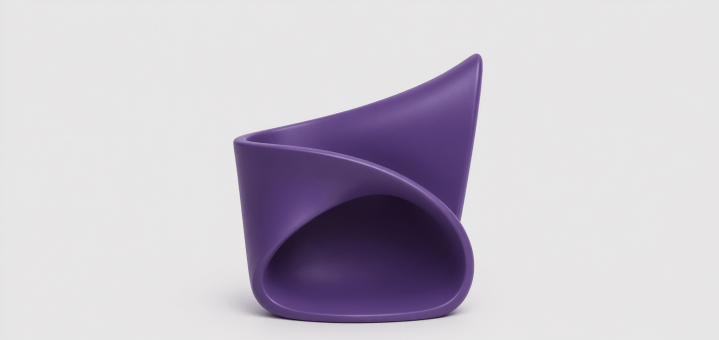
Mara: The post calls it foundational in the same sense that parallel lines never meeting is foundational in geometry — accepted as true because the system cannot be built without it. The IBM-generated solid shown in the post is presented as evidence that both single-qubit and two-qubit gates can be performed reliably on this logical qubit, which the post flags as a necessary condition for universal quantum computation.
Pip: A geometry that doubles as a chromosome. Quantum physics has always had range, but this is a new altitude.
Mara: The architecture is the argument — and symmetry is what makes it hold.
Mara: Symmetry as a design principle, borrowed from nature and built into the chain length itself — that is the thread running through everything here.
Pip: Next time, we will see where that thread goes.

 GIJANE®